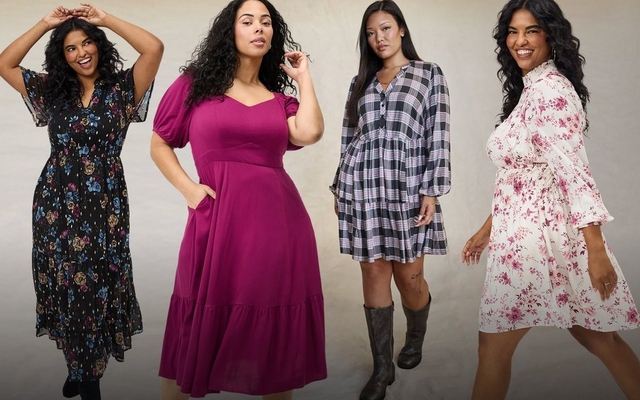
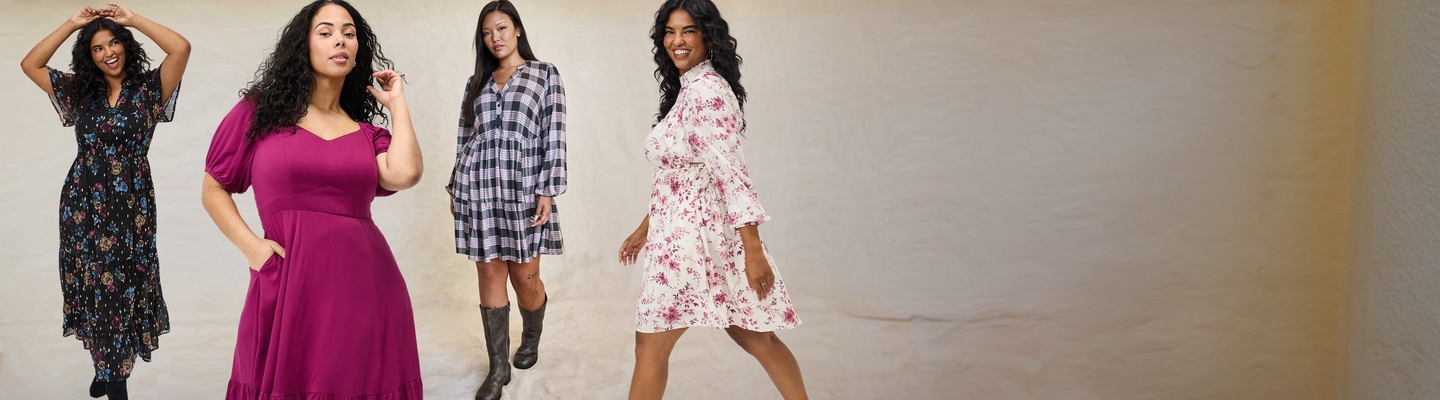
Explore Plus Size Dress Styles
Dress length can change both the feel of an outfit and how it works for a particular setting. Your height, preferred coverage and styling plans can all help determine which length feels right.
| Dress style |
Typical length |
Why you might choose it |
| Mini dresses |
Above or around the knee |
A playful option for casual outfits, parties and warm weather |
| Midi dresses |
Between the knee and ankle |
A versatile length that can move between everyday, work and special-event styling |
| Maxi dresses |
Near the ankle or floor |
A flowing, full-length look that can feel relaxed or elevated depending on the fabric |
| Tea-length dresses |
Near the lower calf or above the ankle |
A polished option with more coverage than a traditional midi |
| Rompers and jumpsuits |
Varies by style |
One-piece alternatives that combine an outfit-in-one feel with shorts or pants |
Silhouette matters just as much as length. A-line and fit-and-flare dresses generally follow the upper body before widening through the skirt. Skater dresses create a similar effect with a playful shape, while wrap and surplice styles use overlapping fabric to form a defined neckline. Shirt dresses offer a structured, button-front-inspired look, and bodycon dresses create a closer fit throughout the body. No silhouette is reserved for a particular body type—the best choice is the one that provides the look, movement and coverage you want.
Finding Your Torrid Dress Size
Torrid dresses are available in plus sizes 10–30, although availability can vary by style. Before choosing a size, compare your current bust, waist and hip measurements with the Torrid size guide. Because dress silhouettes and fabrics behave differently, your preferred size may not be identical across every design.
For a more accurate comparison:
- Measure around the fullest part of your bust while keeping the tape level.
- Measure your natural waist without pulling the tape too tightly.
- Measure around the fullest part of your hips.
- Compare all three measurements with the size chart.
- Review the dress description for information about stretch, construction and intended fit.
If your measurements fall between sizes, consider where the dress is most fitted. A style shaped closely through the bust may require you to prioritize your bust measurement, while a fitted skirt may make the hip measurement more important. Fabric also plays a role: stretchy knits and smocked panels may offer more flexibility than structured woven materials.
How Should a Plus Size Dress Fit?
A dress should allow you to sit, walk and raise your arms comfortably without excessive pulling, shifting or restriction. Check that seams sit in their intended positions, armholes do not pinch and the neckline stays comfortably in place. The waistline may sit at the natural waist, above it or below it depending on the design, so its placement should be evaluated according to the intended silhouette.
Helpful fit details may include:
- Adjustable straps for personalizing strap length and neckline placement
- Smocking or elastic panels that provide flexibility
- Stretch fabrics that move with the body
- Defined seams that help create the intended shape
- Adjustable or removable belts that let you change the waist definition
- Linings that provide coverage beneath sheer or lightweight materials
Dresses for Everyday Life and Special Occasions
The setting can help narrow your choices, but many dresses can work for more than one occasion with a change of shoes, layers or accessories.
Casual and Everyday Dresses
Casual dresses are useful for errands, relaxed weekends, travel, brunch and other everyday plans. Easy silhouettes, knit materials and breathable fabrics can help keep an outfit comfortable. Pair a casual mini or midi dress with sneakers and a denim jacket for a laid-back look, or add ankle boots and a cardigan when the temperature drops.
Work and Polished Daytime Looks
For workplaces where dresses fit the dress code, consider midi lengths, shirt dresses, wrap-inspired styles or simple A-line silhouettes. A blazer or cardigan can add structure, while flats, loafers or boots can help set the tone. Pay attention to neckline, sleeve length and how the dress fits when sitting as well as standing.
Parties, Date Nights and Going-Out Looks
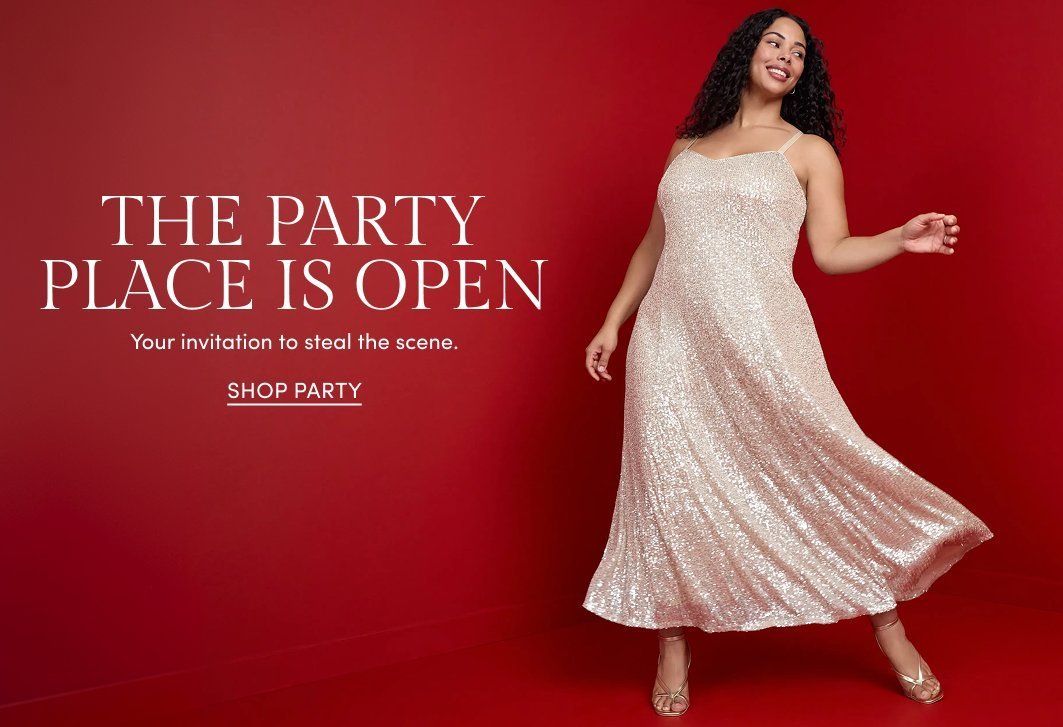
Going-out and party dresses can feature closer silhouettes, statement sleeves, bold prints or fabrics such as satin, lace, chiffon and mesh. Jewelry, a clutch and dressier footwear can give the outfit a more elevated finish, but a going-out look does not have to sacrifice comfort. Stretch, adjustable details and a secure neckline can make a difference during a long evening.
Weddings and Special Events
When shopping for a wedding guest dress, start with the dress code, venue, season and time of day. Cocktail attire often calls for a polished midi, wrap or fit-and-flare dress, while formal celebrations may suit a longer maxi or an elevated fabric. For outdoor weddings, consider the temperature, walking surfaces and wind when choosing your hemline, layers and footwear.
Unless the couple specifies otherwise, avoid outfits that could be mistaken for the bridal look. When in doubt, consult the invitation or wedding website for guidance about color, formality and venue expectations.
Choosing Dresses for the Weather
Fabric weight, sleeve length and layering potential can help a dress work comfortably across different seasons.
Spring
Spring weather can shift throughout the day, so choose dresses that are easy to layer. Midi dresses, light knits and flowy woven styles can pair well with cardigans, denim jackets or lightweight blazers. Floral prints, soft colors and brighter accents can give an outfit a seasonal feel without limiting it to spring.
Summer
For warmer weather, look for sleeveless or short-sleeve styles and breathable-feeling materials such as cotton or lightweight challis. Mini, midi and flowing maxi dresses can all work in the heat; the best choice depends on the fabric, lining and amount of coverage you prefer. Sandals, sneakers and lightweight accessories can keep the outfit feeling relaxed.
Fall
Fall is a natural time for deeper colors, textured fabrics, longer sleeves and versatile layers. Try a midi or maxi dress with ankle boots and a jacket, or wear a mini dress with tights as temperatures cool. Shirt dresses and darker floral prints can also transition easily from late summer into fall.
Winter
Cold-weather dressing is often about strategic layering. Long-sleeve dresses, sweater-like knits and longer hemlines provide additional coverage, while tights, boots and warm outerwear help complete the outfit. A slip or fitted base layer can add warmth beneath some dresses without changing the overall look.
Understanding Dress Fabrics and Construction
Fabric influences how a dress drapes, stretches, moves and feels against the skin. Always review the individual product description and care instructions, since fabric blends and construction vary between dresses.
| Fabric or construction |
General characteristics |
Common styling uses |
| Knit or jersey |
Soft, flexible and often easy to move in |
Everyday dresses and relaxed silhouettes |
| Cotton |
Breathable and familiar in feel |
Casual and warm-weather outfits |
| Challis |
Lightweight with fluid drape |
Flowy dresses and seasonal prints |
| Chiffon |
Lightweight and airy, often used with a lining |
Parties, weddings and layered designs |
| Satin |
Smooth with a subtle or noticeable sheen |
Evening and special-event looks |
| Lace |
Textured and decorative; may be lined or layered |
Romantic, dressy and occasion styles |
| Mesh |
Lightweight and often used as an overlay or detail |
Statement sleeves, necklines and going-out looks |
| Stretch blends |
Combine flexibility with varying degrees of structure |
Close-fitting or movement-friendly dresses |
What Makes Torrid Dresses Different?
Torrid designs its clothing specifically for plus size women rather than simply scaling up clothing developed around smaller proportions. Across the dress assortment, thoughtful elements may include stretch materials, smocked panels, elasticized waists, adjustable straps and strategic seam placement. These features can support fit and wearability while preserving the intended shape of each style.
The collection also offers a broad mix of aesthetics, from understated knit dresses and everyday shirt styles to romantic lace, flowing chiffon, bold prints and statement textures. This range makes it possible to choose a dress based on personal style as well as fit, season or occasion. Since features differ by product, check the description and images to understand the construction of the specific dress you are considering.
How to Style a Plus Size Dress
A dress can serve as the foundation of an outfit, but the surrounding pieces determine whether the finished look feels casual, polished, edgy or romantic.
Start With Your Preferred Shape
Decide whether you want a flowing, tailored or close-fitting silhouette. Then consider which design details support that effect, such as a defined waist, tiered skirt, wrap front or streamlined bodycon shape. The goal is not to follow rules for a particular body type—it is to choose the proportions and amount of definition you enjoy wearing.
Add Layers With Purpose
Outer layers can change the visual balance and practicality of a dress:
- A cropped jacket can keep the waistline visible.
- A long cardigan can echo the vertical line of a midi or maxi dress.
- A blazer can add polish to a casual or sleeveless style.
- A denim or moto-inspired jacket can make a dress feel more relaxed.
- Tights and warm outerwear can extend shorter dresses into cooler seasons.
Choose Shoes for the Setting
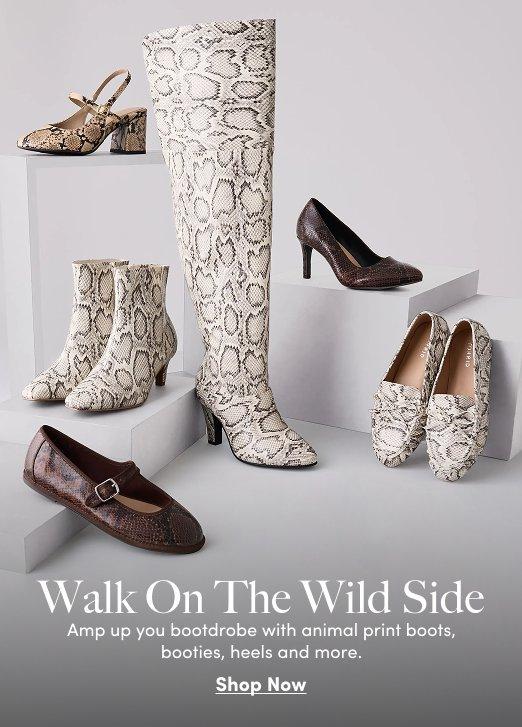
Sneakers and flat sandals can make a dress feel casual, while loafers, boots, heels or dressy flats can create a more polished look. Consider how much walking or standing the occasion requires. For maxi dresses, check the hem length with the shoes you plan to wear to help prevent dragging or tripping.
Use Accessories to Change the Mood
A belt can add definition when the dress construction allows it, while jewelry can draw attention toward the neckline or introduce color and texture. Handbags, hair accessories and hosiery offer additional ways to restyle the same dress without changing the foundation of the outfit.
Necklines, Sleeves and Undergarments
Neckline and sleeve design affect both appearance and what you may want to wear underneath the dress. Before purchasing, consider whether the style works with your preferred bra straps, coverage level and support needs.
A V-neck or surplice neckline creates an open shape at the chest, while crew and scoop necks generally provide more coverage. Halter, strapless and thin-strap designs may require a different bra solution than a short- or long-sleeve dress. Adjustable straps can help refine the placement of some necklines, but they do not change the overall structure of the garment.
Smooth, properly fitted undergarments can help clothing sit comfortably, but shapewear is always optional. Choose foundations based on the support and feel you want rather than the idea that your body must be altered to wear a particular silhouette.
Building a Versatile Dress Wardrobe
Instead of treating every dress as occasion-specific, look for styles that can serve more than one purpose. A simple midi may work with sneakers for daytime, a blazer for work and dressier accessories for dinner. A solid-color maxi can shift across seasons with changes in footwear and outerwear, while a printed mini can be worn alone in warm weather or layered with tights and boots later in the year.
A balanced dress wardrobe might include:
- A comfortable casual dress for everyday wear
- A polished midi or shirt dress for work and daytime plans
- A going-out dress that reflects your personal style
- A wedding guest or special-event option
- A versatile maxi for travel, warm weather or layered outfits
- A romper or jumpsuit for an alternative one-piece look
These are starting points rather than requirements. The most useful wardrobe is one built around the places you actually go, the weather where you live and the silhouettes you genuinely enjoy.
Caring for Your Dresses
Always follow the care label attached to the garment, since dresses with similar appearances may require different washing or drying methods. Delicate fabrics, lace, mesh, embellishments and layered construction may need additional care.
A few habits can help preserve fit and appearance:
- Fasten closures and turn delicate pieces inside out before washing when appropriate.
- Use a garment bag when recommended for lace, mesh or straps.
- Avoid high heat unless the care label specifically allows it.
- Hang or fold dresses according to fabric weight to reduce stretching.
- Use a steamer or the recommended iron setting to address wrinkles safely.
- Store special-event dresses clean and fully dry.
The right plus size dress should support your plans, not complicate them. By considering fit, fabric, length, weather and occasion together, you can choose styles that feel comfortable, reflect your personality and earn a lasting place in your wardrobe.