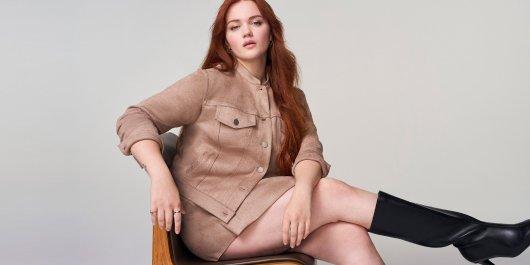
A blazer is often the piece that brings a work outfit into focus. It adds definition over a blouse, gives a dress a more professional direction, and creates an intentional finish with trousers or a skirt. Our plus size Workanywear blazers are designed for the real range of a workday: commuting, sitting through meetings, presenting, working from home, and heading to plans after clocking out.
What Is a Work Blazer?
A work blazer is a tailored or softly structured jacket worn as a polished layer in professional and business-casual settings. Unlike a winter coat, it is primarily an indoor layer that shapes an outfit through features such as a collar, lapels, closures, pockets, seams, and a defined hemline. A blazer can coordinate with matching pieces for a suit-inspired look or stand on its own with complementary separates.
Plus size work blazers are useful across many dress codes because their formality can shift with what is worn underneath. A structured blazer with tailored pants and a blouse suits a formal office, while a softer or longer silhouette with dark denim can work for a relaxed workplace where jeans are permitted.
Start With the Workday You Need It For
Rather than choosing a blazer only by color, consider the pace, setting, and level of polish your day calls for. This makes it easier to decide whether you want a shorter tailored layer, a longer silhouette, a piece with a button closure, or a blazer that can stay open over your outfit.
| Workday situation | Helpful blazer approach | Outfit starting point |
|---|
| Interview, presentation, or client meeting | A classic, structured silhouette in a versatile neutral | Tailored pants, a polished top, and closed-toe shoes |
| Business-casual office | A blazer that layers comfortably over a blouse, knit, or shell | Work tops with trousers or a midi skirt |
| Hybrid or work-from-home day | A stretch-forward style that keeps its shape while you move and sit | A simple top with comfortable work bottoms |
| Work dinner or networking event | A blazer that gives a dress or jumpsuit a sharper finish | A solid work dress with simple accessories |
| Casual Friday | A polished layer that balances more relaxed pieces | Dark-wash plus size jeans and a refined top |
The strongest work wardrobe is not necessarily a matching suit wardrobe. Separates give you more ways to repeat a blazer: over a printed blouse one day, with monochrome pieces the next, or as a layer over a dress when the occasion calls for more structure.
Sizing a Plus Size Blazer for Comfortable Layering
A blazer should have enough room to move through the shoulders, upper arms, and back without looking or feeling restrictive. Begin with your usual Torrid size, then use the product page’s size and fit notes for the individual style. Our size chart is a useful starting point when comparing body measurements with a garment’s intended fit.
When trying on a blazer, wear or hold the kind of top you expect to pair with it most often. A lightweight shell takes up less room than a button-front shirt or fine-gauge sweater, so your usual layering habits matter.
Use these practical fit checks before deciding:
- Check the shoulders first. The shoulder seam should sit naturally at the edge of your shoulder rather than pulling inward or dropping too far down the arm.
- Move your arms forward. Reach toward a desk or pretend to drive. You should have room across the upper back without strong pulling.
- Test the closure if you plan to wear it closed. A buttoned blazer should lie smoothly without gaping or straining across the bust, waist, or hips.
- Consider sleeve and body length. Look for a sleeve length that works with your watch or jewelry and a hem that complements the rise of your pants or the proportion of your dress.
- Sit down. A work blazer should still feel workable while seated, especially if your day includes meetings, commuting, or long desk time.
A blazer does not need to be worn buttoned to fit well. If you prefer an open front, focus on shoulder comfort, arm mobility, and how the lapels fall over your top. For a more tailored, closed look, make sure the waist and hip area remain comfortable without distortion.
How Blazer Shape Changes an Outfit
The silhouette changes both the visual balance and the way a blazer functions in your wardrobe.
- Classic or hip-length blazers create a familiar tailored proportion with trousers, pencil skirts, and dresses.
- Longline blazers extend below the hip and create a longer vertical line; they work especially well over slimmer pants, leggings styled for an appropriate office, or a fitted dress.
- Cinched or waist-defined blazers add shaping through the middle and can be paired with trousers or a skirt for a more traditional professional effect.
- Collarless or shawl-collar styles offer a softer frame around the neckline and work well when you want the layer to feel refined without a conventional lapel.
- Peplum shapes add volume below the waist and create a more defined silhouette with streamlined bottoms.
Try contrast deliberately. A longer blazer can balance a more fitted bottom, while a shorter tailored blazer can pair naturally with wide-leg trousers. For a coordinated look without requiring an exact suit match, repeat one color between your blazer and another item, then use a different neutral for the remaining pieces.
Outfit Formulas That Make Getting Ready Easier
A few repeatable formulas can make a blazer feel practical rather than reserved for special meetings.
For a polished office look
Wear a blazer over a fluid blouse with wide-leg pants. Keep the colors in the same family for a long, clean line, then choose loafers, flats, or pumps based on your workplace.
For a dress-focused work outfit
Add a blazer to a midi, sheath-inspired, or structured dress when you want more coverage at the shoulders or a more formal finish. A simple blazer can also make a printed dress feel appropriate for a client-facing setting. Explore plus size dresses for styles that can anchor this kind of outfit.
For a skirt-and-blazer combination
Pair a blazer with a plus size skirt and a tucked or semi-tucked top. A pencil silhouette creates a streamlined suit-separate effect, while a midi skirt can give the outfit more movement. Keep the top relatively close to the body so it layers smoothly underneath.
For business-casual denim days
When your workplace permits denim, choose a dark, clean wash and add a blazer over a knit top or button-up. The blazer provides the structure; the rest of the outfit can stay uncomplicated. Skip heavily distressed denim for settings that expect a more traditional business-casual standard.
Fabrics, Weather, and Seasonal Layering
A blazer is best treated as an indoor layer, not as your main source of weather protection. In offices with strong air conditioning, it adds comfortable coverage over lighter tops and dresses through spring and summer. During fall and winter, it becomes part of a three-layer approach: base top, blazer, then a separate coat for the commute.
Our Luxe Ponte knit fabric is a signature Workanywear fabric in select styles, combining office-ready tailoring with maximum stretch, comfortable hold, and machine-washable care. Select lightweight ponte blazers offer a lighter version of that stretch-and-hold feel. Because fabric, lining, and care instructions vary by style, always consult the product page before deciding which option best fits your climate and routine.
For cooler weather, choose an outer layer with sleeves roomy enough to fit comfortably over a blazer. A plus size coat or jacket should protect you outdoors without compressing the blazer’s shoulders or lapels. Indoors, you can remove the coat and retain the professional structure of your outfit.
In warmer conditions, balance a blazer with breathable-feeling layers underneath and keep your color palette lighter if that suits your workplace. You may also prefer a style you can carry or drape over a chair when moving between outdoor heat and a cool office.
What Makes Our Workanywear Blazers Unique
We build Workanywear blazers around the needs of plus size women who expect more from a professional layer than a sharp appearance alone. Our select Luxe Ponte styles bring together the structured look of tailored workwear with maximum stretch, curve-loving hold, and machine-washable care. That combination supports a workday that includes movement, seated time, commuting, and repeated wear instead of treating a blazer as a stiff, occasional piece.
Details matter to how a blazer works. Depending on the style, our assortment includes elements such as collared or notch necklines, single-button or two-button closures, front pockets, back vents, lined bodices, cinched waists, and longline proportions. These are functional design choices, not just finishing touches: a back vent can support movement, pockets add utility, and a thoughtfully placed hem helps a blazer work with different bottoms and dresses.
We also make it easier to build a cohesive work wardrobe from connected categories. A blazer should not be an isolated purchase. It should be a layer you can return to with tops, pants, skirts, dresses, and suit separates as your calendar and dress code change.
Related Workwear Pieces to Build Around a Blazer
Once you have identified the blazer shape that works for you, use these categories to create a flexible rotation:
- Plus size suits for more coordinated professional dressing
- Button-up shirts for a crisp layer under lapels
- Cardigans for days when a softer business-casual layer makes more sense
- Pencil skirts for a streamlined office outfit
- Shoes that suit your commute, dress code, and time on your feet
- Workanywear for professional separates across the full collection
Caring for a Blazer Between Workdays
Read the garment’s care label before washing, steaming, or pressing. Many of our Luxe Ponte workwear styles are machine washable, but care instructions can differ by fabric and construction. Close buttons before washing when directed, avoid overcrowding the machine, and reshape the garment after washing to help preserve its silhouette.
Hang a blazer on a shaped hanger between wears so the shoulders retain their form. If you wear it frequently, give it time to air out before placing it back in your work rotation. Spot-cleaning a small mark promptly can also reduce the need for frequent full washes.
Workanywear Blazer FAQs
Are blazers appropriate for business casual offices?
Yes. A blazer is one of the easiest ways to make a business-casual outfit feel more polished. Pair it with trousers, a blouse, a knit top, a skirt, or a work-appropriate dress.
Should a plus size blazer be tight or loose?
It should feel comfortable through the shoulders, arms, bust, waist, and upper back. A tailored blazer can have shape without feeling restrictive, while a relaxed blazer should still sit cleanly at the shoulders.
Can I wear a work blazer open?
Yes. Many blazers look and function well worn open. If you prefer that approach, prioritize shoulder fit, arm mobility, and a lapel shape that lies smoothly over your top.
How should a blazer fit across the bust?
When buttoned, it should close without pulling, gaping, or creating horizontal tension lines. If you usually wear it open, it should still sit comfortably across the chest and back.
What should I wear under a blazer for work?
Blouses, button-front shirts, shells, polished knit tops, and simple tees can all work, depending on your workplace. Choose an underlayer that feels smooth and comfortable beneath the sleeves.
Can I wear a blazer with jeans to work?
Yes, if jeans are accepted in your workplace. Choose a dark, clean wash and pair it with a polished top and professional shoes to keep the outfit balanced.
Is a blazer warm enough for winter?
A blazer is typically an indoor layer rather than a winter coat. In cold weather, wear it under an appropriately warm outer layer for the commute.
Are ponte blazers comfortable for sitting at a desk?
Ponte is a knit fabric with stretch, which can be especially useful for workdays that involve sitting and moving. Check each product page for the individual garment’s fabric and stretch details.
Do I need matching pants to wear a blazer?
No. Matching pieces create a suit-inspired look, but a blazer also works well with contrasting trousers, skirts, dresses, or polished denim.
What length blazer should I choose?
Choose based on the proportions you prefer and the pieces you wear most. Classic lengths work well with many office staples, while longline styles can add coverage and pair naturally with slimmer bottoms or dresses.
Can a blazer be worn to an interview?
Yes. A tailored blazer is a reliable interview layer because it adds polish to trousers, a skirt, or a dress. Choose an outfit that aligns with the industry and workplace dress code.
How do I keep a blazer looking smooth during the day?
Start with the right fit, avoid overfilling pockets, and hang the blazer when you arrive or leave work when possible. Follow the garment-specific care instructions for washing and reshaping.